The language of those documents runs to phrases like "expanding access" and "accelerating innovation," which are true in the way that weather forecasts are true: technically accurate and structurally uninformative. The more revealing frame is territorial. The AI industry is sorting itself into a stack, and every serious player is racing to own a layer of it before someone else does.
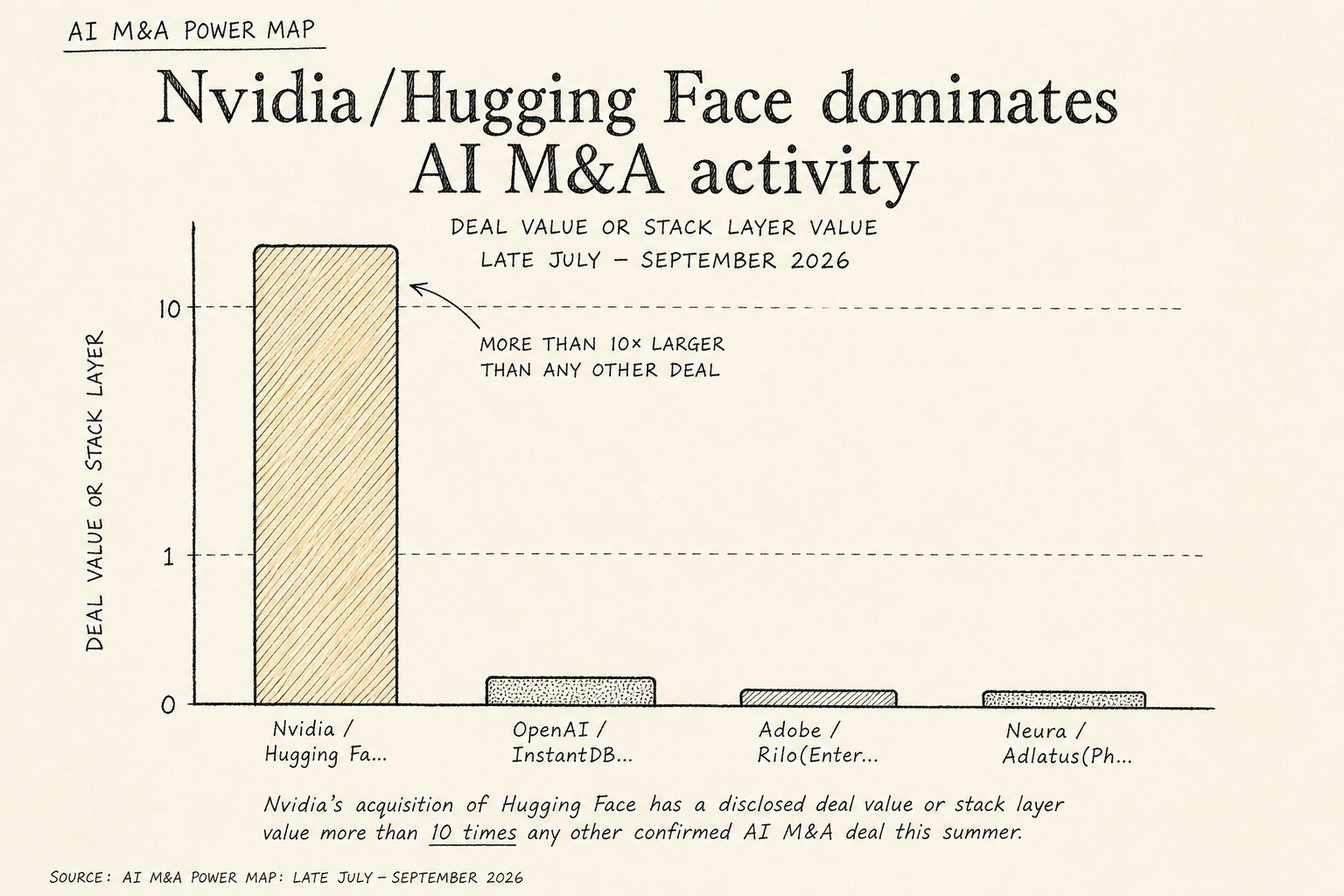
Four acquisitions, announced in the six weeks between late August and early September 2026, make this pattern visible in a way that no single deal could on its own. Nvidia agreed to buy Hugging Face for $12.93 billion, the largest AI acquisition of the year. [1] [2] OpenAI acquired the team behind InstantDB, a real-time database startup, for undisclosed terms. [3] [4] Adobe absorbed the six-person team from Rilo, an Indian AI workflow company, in a licensing and team deal. [5] And Neura Robotics acquired Adlatus Robotics, an autonomous cleaning machine manufacturer based in Ulm, Germany. [6] [7] Together, these four deals describe a map of the AI stack from compute to corpus to agent to workflow to body, and they explain, more clearly than any analyst note, where the weight of the industry is actually falling.
To understand why any of this matters, it helps to understand what a technology stack is and why the concept applies here with unusual force.
The Architecture Nobody Planned
A technology stack is not designed, exactly. It emerges. It is the set of layered components that must all be present for a technology to function, and it gets defined in retrospect by whoever controls each level. The internet had one: cables, routers, protocols, operating systems, browsers, applications. Each layer created conditions for the layer above it, and companies that owned critical layers extracted disproportionate value from the whole system. Microsoft owned the operating system layer and used that position to push into browsers, office software, and eventually enterprise cloud. Google owned search and used that to push into advertising, mobile operating systems, and cloud infrastructure. The pattern is consistent enough to look like a law.
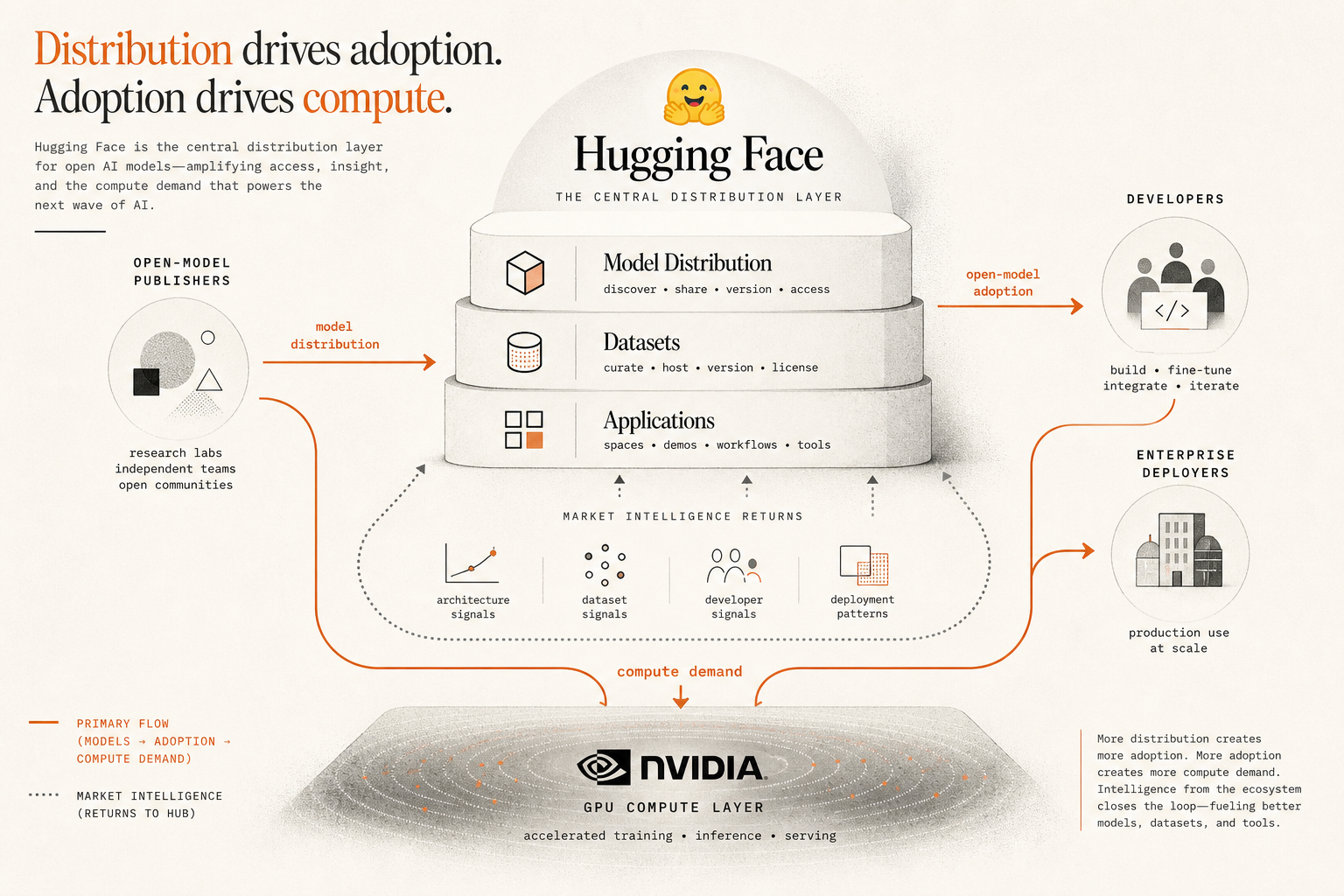
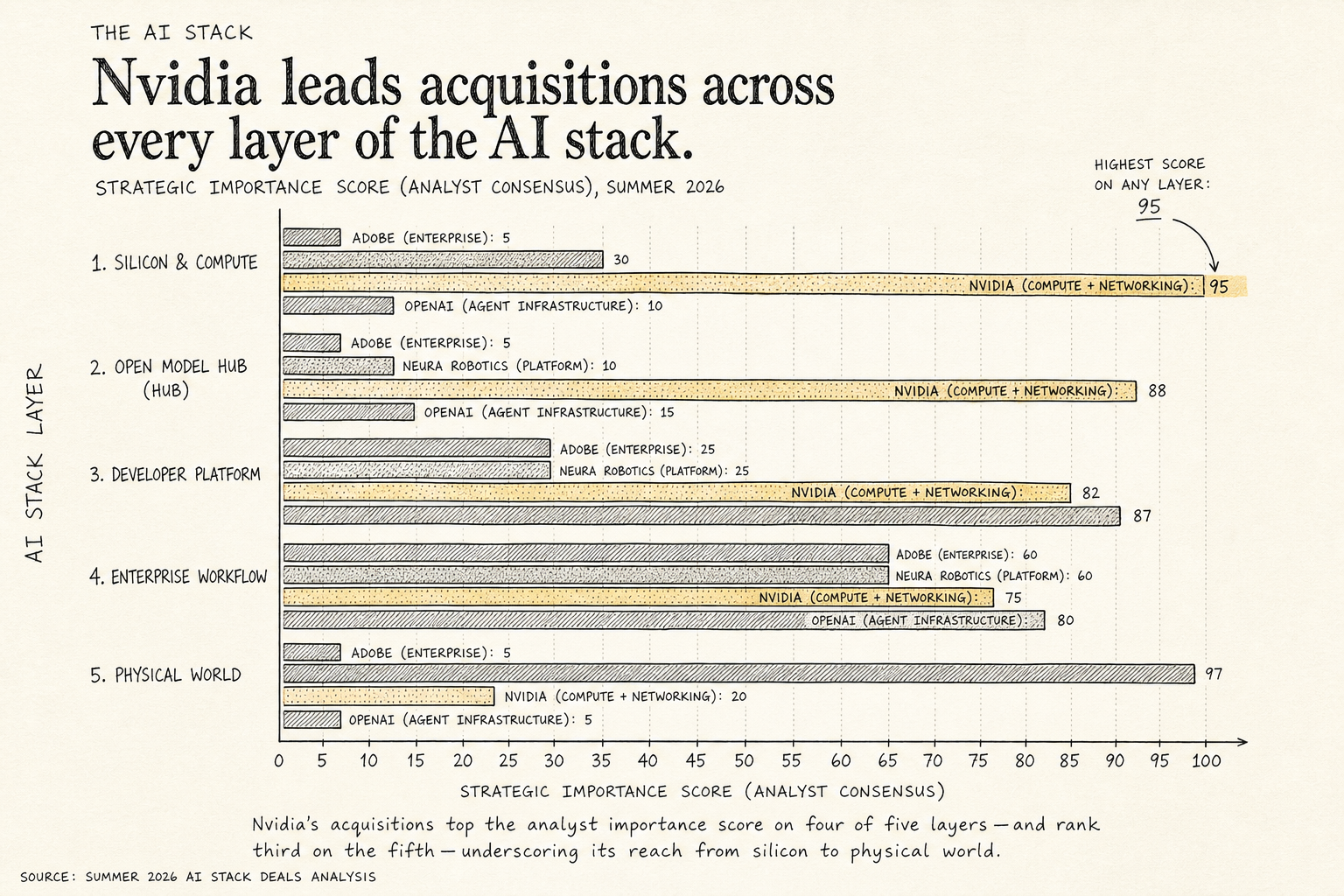
AI is now generating a stack of its own. At the bottom sits compute: the graphics processing units, training clusters, and inference hardware that AI runs on. Above that sits the model layer: the large language models, image generators, and embedding systems that translate compute into capability. Above that sits the distribution layer: the platforms where developers find models, evaluate them, fine-tune them, and deploy them. Above that sits the application layer: the developer platforms, agent frameworks, and enterprise software systems where AI does actual work. And at the top, or perhaps alongside everything, sits the physical layer: robots, autonomous vehicles, and embodied systems that bring AI into the material world.
In each case, the question of who controls the layer determines who captures the value. The summer 2026 acquisitions are four answers to that question, at four different altitudes.
Jensen Huang Buys the App Store for AI
The Nvidia acquisition of Hugging Face is the easiest to explain and the hardest to fully understand. On its surface, it is a chipmaker buying a software platform. Beneath the surface, it is one of the more consequential vertical integration plays in technology history.
Nvidia's core business is selling graphics processing units, primarily to AI training and inference workloads. Its market position is extreme. Blackwell GPUs capture somewhere between 80 and 95 percent of training workloads. [8] CUDA, the proprietary programming framework that Nvidia introduced in 2007, is used by 98 percent of AI developers. [9] PyTorch, TensorFlow, and JAX, the dominant AI frameworks, are all built on top of it. This means that building an AI model is, in practice, writing code that runs on Nvidia hardware, because rewriting for AMD or Intel requires more effort than most organizations are willing to invest.
This should be a completely secure position. In practice, Jensen Huang treats it as a problem to solve. The frontier AI labs, OpenAI and Anthropic in particular, are investing in custom silicon to reduce their dependence on Nvidia. If they succeed, even partially, Nvidia's dominance becomes vulnerable. The strategic response is to make sure that AI demand does not concentrate in those labs. The way to do that is to ensure that open-weight models, the ones anyone can download and run, thrive alongside closed proprietary ones. As Huang stated at CES in January 2026: "one in every four AI tokens generated today comes from an open model." [10] Every open-model deployment needs compute. Most of that compute runs on Nvidia GPUs. If Nvidia can grow the open-model share of AI from 25 percent to 40 percent, it effectively diversifies its revenue base without doing anything other than making a strategic argument for openness.
Hugging Face is the platform where open models live. It hosts more than 18 million developers, researchers, and creators working with more than 3 million models, 500,000 datasets, and 1 million applications. [1] More than 200,000 companies use it to discover, evaluate, and deploy AI. [1] It is, without much competition, the central distribution hub for open-weight AI: the place where Meta's Llama family, Mistral's models, and thousands of community variants are hosted, versioned, shared, and built upon. Nvidia itself had released more than 500 models on Hugging Face before announcing the acquisition. [1]
The deal closed at $12,930,300,000, a figure that contains a deliberate flourish: the number encodes the Unicode code point for the hugging face emoji, a detail Huang did not bother to explain. [11] [12] The structure paired $11.9 billion to shareholders with up to $1 billion in equity retention for employees. [13] [14] All three co-founders, Clément Delangue, Julien Chaumond, and Thomas Wolf, committed to six-year retention agreements. [15] The deal is Nvidia's second largest ever, following the $20 billion asset acquisition from AI chip startup Groq in December 2025. [2] [16] It values Hugging Face at nearly three times the $4.5 billion valuation from its 2023 funding round, and nearly twice the $7 billion implied by an earlier Nvidia investment offer that Hugging Face rejected. [17] [18]
On a CNBC interview the morning of the announcement, Delangue described how the deal came together: "During the summer, I think we realized that Hugging Face and open-source AI in general was at a turning point, and that it needed more resources, more scale, more visibility. So we went to see Jensen, and we told him, we want to make open source AI big. And he told us, let's do it." [19] Huang's stated commitment was equally clear: "Hugging Face will remain an open platform for the entire AI ecosystem. Developers will choose the models they want, the frameworks they want, the clouds and inference service providers they want and the computing platforms they want. Nvidia compute will not be required to build on or deploy through Hugging Face." [1]
The tension in that promise is real and is being discussed seriously by people who track AI infrastructure. Hugging Face's value depends entirely on being perceived as neutral, the Switzerland of AI, a platform where Google researchers, Meta engineers, independent academics, and startup founders all share the same ground regardless of which hardware their employers prefer. The moment developers believe the platform tilts toward Nvidia, whether through search ranking adjustments, default sort orders favoring Nvidia-optimized model formats, or subtler signals, the trust that makes the platform valuable begins to erode. The Microsoft acquisition of GitHub in 2018 for $7.5 billion is the closest precedent, and analysts note that even GitHub's story is more contested eight years later than it appeared at signing, with GitLab aggressively marketing around developer complaints that GitHub's independence has frayed under Copilot integration pressures. [20]
Forrester analyst Charlie Dai's framing is probably the most accurate short-term prediction: "As Hugging Face's value comes from neutrality, Nvidia is likely to preserve openness initially. Enterprises should watch for future shifts rather than immediate disruption." [21] The Counterpoint Research formulation is blunter: the zoo fragments if neutrality erodes, and the asset shrinks with it. [22]
The strategic logic for Nvidia, however, extends beyond model distribution. Owning the hub gives Nvidia intelligence that its hardware business currently lacks: visibility into which model architectures are gaining traction, which datasets developers are downloading, and which inference patterns are emerging, often months before those trends translate into GPU purchase orders. [23] Forrester analyst Naveen Chhabra described the information advantage to CNBC as the ability to see "which models are trending, what datasets customers are downloading, and the architectures that are gaining traction weeks before they hit mainstream tech news." [23] For a company that makes capital allocation decisions measured in tens of billions of dollars, that is intelligence worth purchasing.
OpenAI Buys the Agent's Memory
Three days before the Nvidia deal was announced, OpenAI quietly completed a different kind of acquisition. On August 22, it announced it had acquired the team behind InstantDB, a real-time database and backend-as-a-service platform that had emerged from Y Combinator's S22 batch. [3] [24] No financial terms were disclosed.
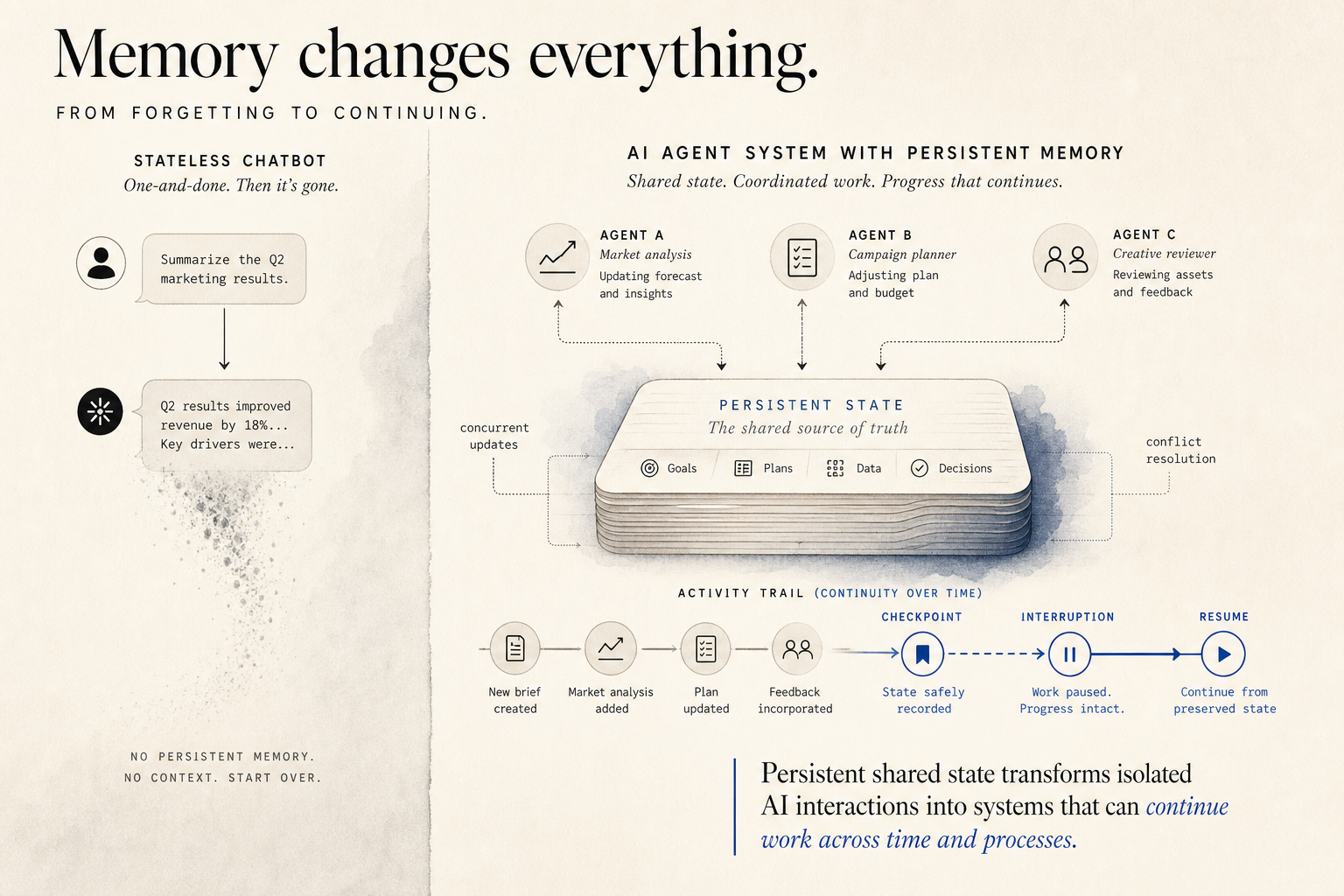
To understand why OpenAI wanted this team requires understanding a specific technical problem that most coverage of AI agents elides. The dominant image of AI, shaped by three years of chatbot interaction, is a system that answers questions and forgets everything. That model works for a single exchange. It does not work for an autonomous agent executing a multi-step task across hours, days, or multiple simultaneous processes.
Consider what an agent actually needs to do. It must maintain awareness of where it is in a complex task. It must read and write data to shared resources without corrupting state when two processes run concurrently. It must resolve conflicts when two agents update the same record simultaneously. It must track partial progress so that if interrupted, it can resume rather than restart. These are not AI problems in the model sense. They are database problems, specifically the problems that real-time transactional databases were built to solve. An agent without infrastructure for persistent state management is, in practice, an agent with amnesia: capable in isolation, dysfunctional in production.
InstantDB was built to solve exactly this class of problem. The platform, which began in 2021 and went through Y Combinator in 2022, offered developers backend infrastructure handling real-time data synchronization with authentication, permissions, storage, presence, and streams. [25] By the time of the acquisition, it had served more than 17,000 users, powered approximately 400,000 applications, and processed roughly 2.5 billion transactions. [3] [24] The founders, Joe Averbukh and Stepan Parunashvili, were both former senior and director-level engineers at Facebook and Airbnb: engineers who had spent careers building systems for state management at scale. [24]
A detail in the funding history is instructive. In 2024, InstantDB raised a $3.4 million seed round from Y Combinator, SV Angel, Firebase CEO James Tamplin, Y Combinator co-founder Paul Graham, and Greg Brockman, the co-founder and president of OpenAI. [24] Brockman's participation roughly two years before the acquisition suggests that OpenAI had identified the team as a priority long before the acqui-hire became public. The InstantDB cloud service is being wound down: new signups halted immediately, billing refunds offered for charges after July 31, 2026, cloud hosting continuing until August 31, 2027, and the open-source codebase remaining available for self-hosting. [3]
The acquisition fits within OpenAI's broader pattern across 17 completed acquisitions since 2023. [26] The company has been systematically assembling the infrastructure layer that agents require: Rockset for real-time analytics, Ona for secure cloud execution of agents within enterprise-controlled infrastructure, Astral for Python developer tooling, Promptfoo for agent security testing. [27] [28] [29] The InstantDB deal adds the persistent state layer to that stack. OpenAI's Codex platform, which reached more than 3 million weekly active developers by July 2026, [30] is the application that all of this infrastructure ultimately serves. Agents running within Codex need to remember what they were doing. InstantDB's founders know how to build memory systems at Airbnb-level scale.
The deal is modest in disclosed scope. A six-person team joining a company approaching $40 billion in annualized revenue, which OpenAI reached by August 2026, [31] is not a transformative transaction by any conventional financial measure. It is transformative in the way that adding a specific rare capability to a system is transformative: not because it changes the scale, but because it removes a constraint that would otherwise limit everything above it.
Adobe Defends the Workflow Layer
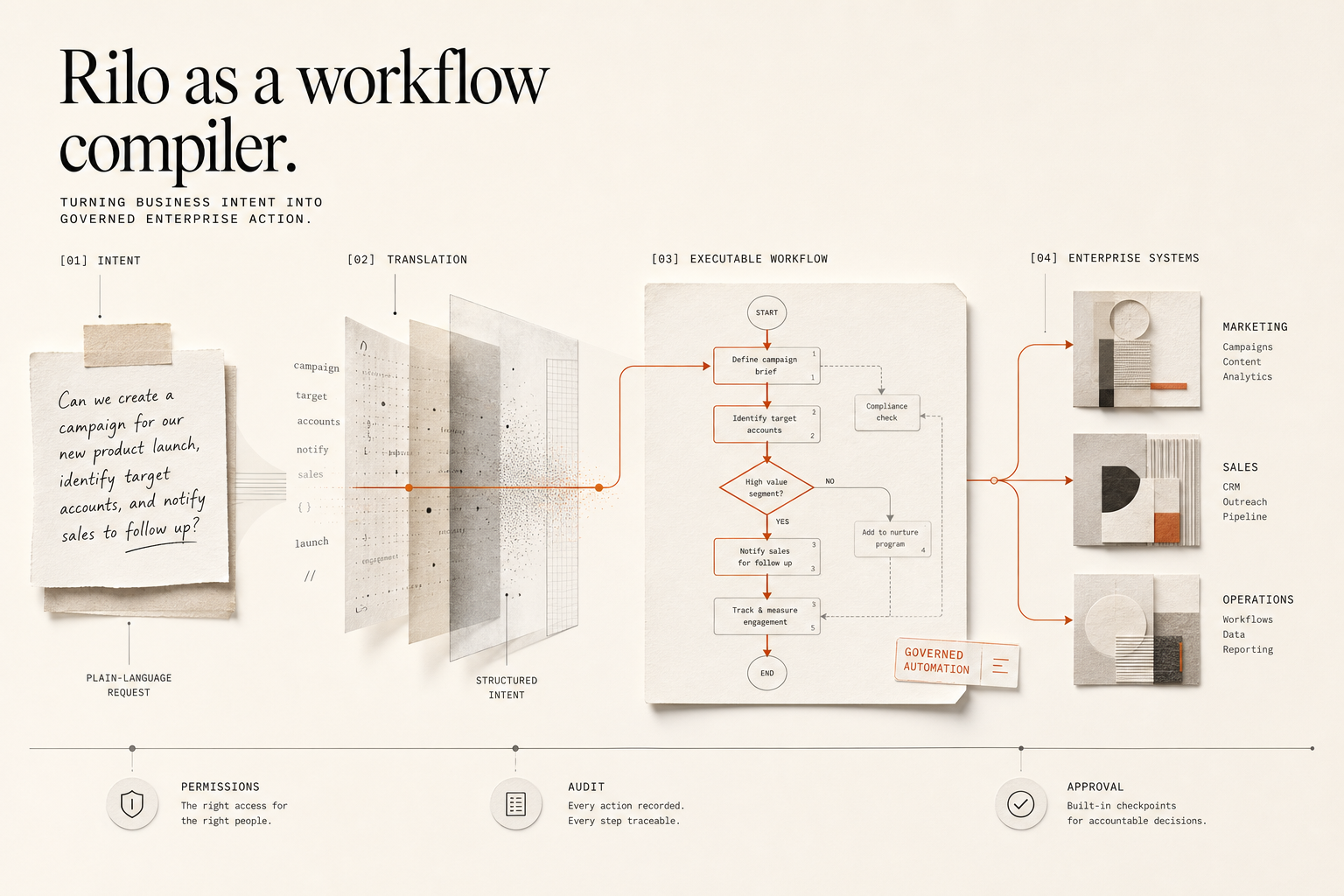
On September 2, TechCrunch reported and Adobe confirmed the acquisition of Rilo, a Bengaluru-based startup founded in 2025 by IIT classmates Georgi Boby and Dhruv Jaglan. [5] The six-person team, backed by Peak XV, DeVC, and Day Zero Ventures at a $10 million valuation on $1 million in seed funding, had built an AI workflow automation platform for go-to-market teams. [32] [33] [34] The company's product allowed marketing, sales, and operations teams to automate competitor intelligence, lead prospecting, investor tracking, and content distribution by describing their desired workflows in plain English. [35] Rilo connected to more than 100 tools including HubSpot, Salesforce, Apollo, LinkedIn, Notion, Slack, and Zapier, and translated natural language descriptions into structured, executable automations. [35] The product had reached approximately 10,000 users in the months since launch, per co-founder Dhruv Jaglan. [32]
The deal is structured as a technology licensing and team acquisition. [5] [34] Rilo's standalone product is shutting down. Existing investors receive an exit. The six-person team joins Adobe's customer experience organization. This structure matters because it signals exactly what Adobe wanted: not the company, not the customer base, not the revenue. The team and the technical approach.
To understand what Adobe gains requires understanding the problem it is trying to solve, which is simultaneously simpler and harder than it looks. Adobe sits atop one of the most defensible positions in enterprise software. Photoshop, Illustrator, Premiere Pro, After Effects, and InDesign are so deeply embedded in the workflows of film studios, advertising agencies, publishing houses, and Fortune 500 marketing departments that switching costs are measured in years of retraining, template rebuilding, and institutional knowledge reconstitution. [36] The company's Firefly AI image generator, built on licensed content and Adobe Stock imagery, carries IP indemnification of up to $3 million per asset for enterprise customers, a guarantee no other AI image generator offers. [36] Adobe's Q2 fiscal 2026 revenue came in at $6.618 billion, with net income of $1.712 billion and gross margin of approximately 89.2 percent. [37]
The threat Adobe faces is not that competitors will outbuild it. The threat is that competitors will outflank it. Canva operates at $4 billion in annualized revenue growing 35 percent year over year. [38] Figma, whose $20 billion acquisition by Adobe was blocked by regulators in 2023, is growing at 40 percent annually and penetrates only 4 percent of an estimated $26 billion total addressable market. [36] [39] Midjourney generates approximately $500 million in revenue. [38] These platforms are not better than Adobe's professional tools for the workflows that matter most to enterprise buyers. They are faster, cheaper, and AI-native from inception, which makes them attractive to every user who does not need the full depth of Adobe's capabilities.
Adobe's response has been acquisition-driven. The $1.87 billion Semrush deal, which closed on April 28, 2026, gave it generative engine optimization capabilities at a time when traffic to US retail websites from generative AI chatbots had increased 1,200 percent year over year. [40] [41] The June 2026 Topaz Labs acquisition brought proprietary on-device AI inference technology, specifically the Neurostream system that reduces memory requirements by up to 95 percent while enabling professional-grade enhancement on consumer hardware. [42] [43] These are not defensive moves in the conventional sense. They are attempts to stay at the front of a market that is moving faster than any incumbent can build organically.
Rilo fits the same logic. At Adobe Summit in April 2026, the company launched CX Enterprise, a full agentic AI system for customer experience orchestration replacing its existing Experience Cloud product, with AI agents, reusable skills, Model Context Protocol endpoints, and governance layers. [44] [45] What CX Enterprise needs in order to actually work at enterprise scale is exactly what Rilo was building: structured workflow automation that does not require developers to write API integrations, that connects to the tools marketing and sales teams already use, and that translates business intent into machine-executable instructions. The Rilo team, with its production experience building workflows for early-stage enterprise customers, brings a specific kind of operational knowledge that Adobe could not hire for out of a job posting.
Adobe's incoming CEO, Anil Chakravarthy, who takes over from Shantanu Narayen on December 1, 2026, is an enterprise data and governance specialist who converted Informatica from legacy software into a cloud subscription business. [46] [47] The Rilo acquisition, timed to the week before that transition, suggests a company actively positioning its agentic stack for the executive who will be responsible for it. The AI value-capture question that hangs over Adobe's stock, which has fallen approximately 24 percent in 2026 as markets debate whether AI makes individual creative professionals more productive or simply reduces the number of seats enterprise customers need, [36] is ultimately a question about whether Adobe owns the workflow layer or merely participates in it. Rilo is a bet on ownership.
During the summer, I think we realized that Hugging Face and open-source AI in general was at a turning point, and that it needed more resources, more scale, more visibility.
Neura Robotics and the Problem That Software Cannot Solve
The Adlatus deal is the least glamorous of the four and, in a certain analytical frame, the most significant.
Neura Robotics is a German company founded in 2019 by David Reger, operating out of Metzingen with more than 1,500 employees across 8 global locations. [48] It builds what it calls cognitive robots, machines that integrate sensors, machine vision, and AI to perceive, reason, and interact with physical environments. Its flagship product, the 4NE1 humanoid robot, stands 180 centimeters tall, weighs 80 kilograms, and carries a price tag of $98,000 for small orders, dropping to $60,000 at fleet scale. [49] A compact variant, the 4NE1 Mini, priced at $19,999, began shipping in April 2026. The company raised up to $1.4 billion in a Series C round announced June 10, 2026, at a valuation of approximately $7 billion, the largest funding round ever completed by a full-stack robotics company, with investors including Tether, Qualcomm, Amazon, Nvidia, Bosch, Schaeffler, and the European Investment Bank. [50] [51]
ADLATUS Robotics GmbH, the company Neura acquired on August 24, is something different from a humanoid. Founded in Ulm in 2015 by Matthias Strobel and Siegfried Hochdorfer, it makes autonomous professional cleaning robots deployed in airports, supermarkets, hospitals, sports halls, and logistics centers. [6] [52] The company name comes from the Latin word for "helper." [53] Its CR700C and CR700D systems navigate via 2D and 3D lidar sensors rather than high-resolution cameras, a design choice made explicitly for data protection compliance: the robots record surrounding data only as coordinates, meeting GDPR requirements without capturing imagery of the people and spaces around them. [54] The systems can interface with building infrastructure, communicate with fire alarms, operate automatic doors, and generate automated cleaning documentation. [54] At the time of acquisition, Adlatus had hundreds of systems deployed globally, with proprietary navigation software developed and refined over years of real-world operation. [6] [55]
The acquisition is the fifth Neura has completed in sixteen months. [56] It followed by eleven days Neura's separate agreement to acquire the ACTIVE Shuttle autonomous guided vehicle system from Bosch Rexroth, effective October 1, 2026, including hardware, software stack, ACTIVE Fleet Manager, and ROKIT navigation software. [57] [58] Bosch Rexroth is simultaneously a financial backer of Neura's Series C, a dual role that allowed it to exit a peripheral product while retaining equity upside in the acquiring company. [59]
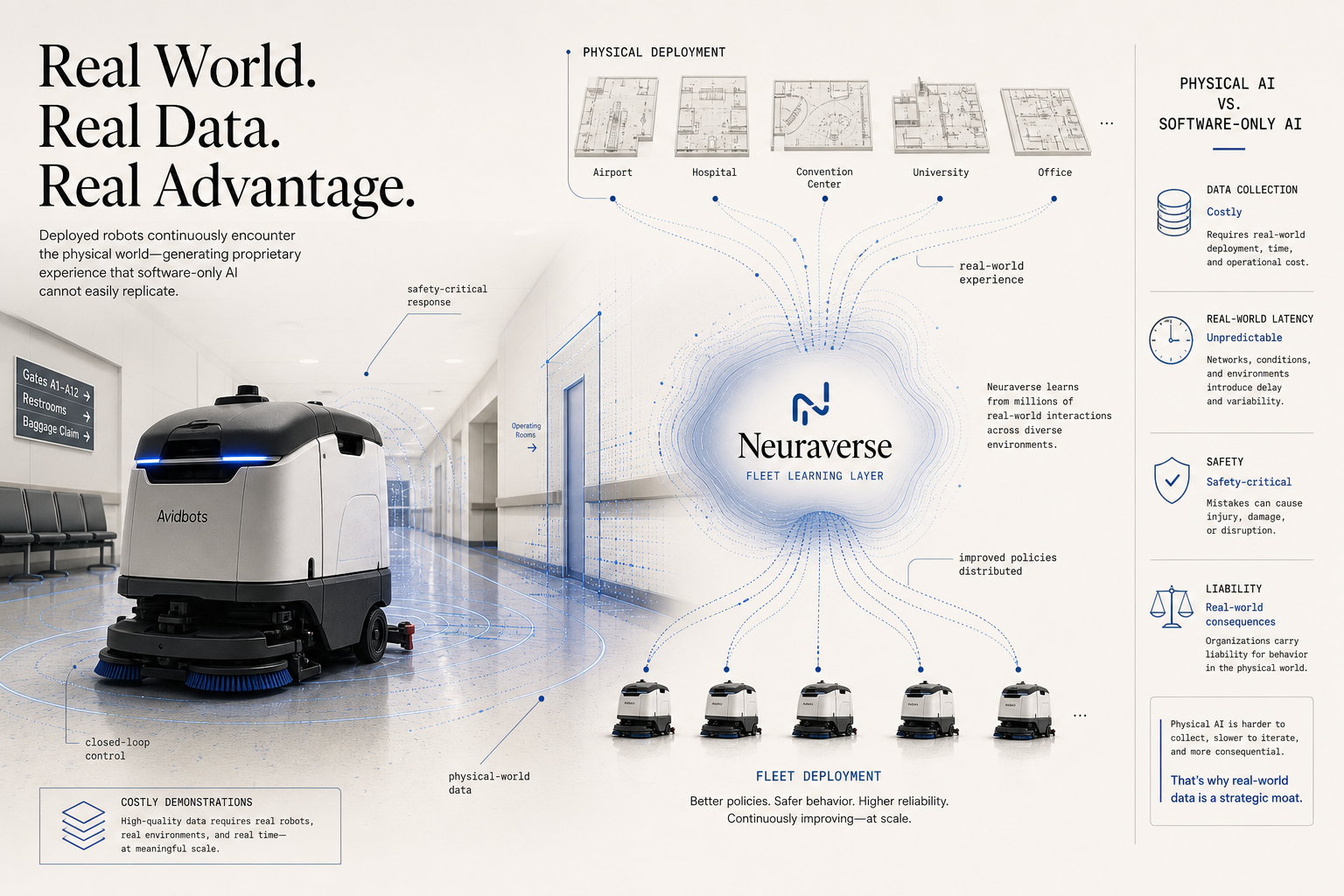
The strategic logic of the Adlatus acquisition is best understood through the concept of Physical AI, a term that has passed from buzzword into technical descriptor over the past two years. Physical AI is AI that takes physical action in the world: it perceives through sensors, makes decisions through models, and changes the state of physical reality through actuators. The distinction from software AI is not rhetorical. A language model that answers a question incorrectly can be regenerated in milliseconds with minimal consequence. A robot that collides with a shelf or drops a medical instrument experiences failure with real-world consequences. This imposes engineering requirements that software AI does not face: 2-millisecond control cycles for manipulation tasks against a 2-second tolerance in chatbot interactions, closed-loop feedback across sensor noise and friction variation, real-time latency requirements for safety-critical decisions, and liability exposure if things go wrong. [60] [61] [62]
Physical AI also has a data problem that software AI has largely solved. Large language models were trained on hundreds of billions of documents and images freely available on the internet. Physical AI has no equivalent public dataset. Single demonstrations of robot behavior cost between $30 and $200 to collect, making physical AI training data roughly 1,000 to 10,000 times more expensive per sample than digital AI data. [63] The robots that have the most proprietary training data are the ones that have been deployed in real environments for the longest time.
Adlatus has been deploying cleaning robots in real commercial environments since 2015. Its navigation software has accumulated years of operational data across airports, hospitals, and industrial facilities. Neura's plan is not simply to add these robots to a catalog. The announced intention is to equip Adlatus systems with additional sensor and AI capabilities and connect them to Neuraverse, Neura's continuously learning operating system for cognitive AI. [6] Over time, Neura intends the cleaning robots to stop following predetermined cleaning routes and begin understanding surface types, soiling conditions, and resource constraints, selecting their own strategies based on accumulated learned experience. [6] The Adlatus installed base is not a product portfolio. It is a training data source at commercial scale, already deployed across the environments where the robots need to operate.
Reger's articulation of the broader goal is worth taking at face value: "Europe has an incredible wealth of robotics and industrial know-how. Our task now is to bring these technologies together into something bigger. Our goal is an open ecosystem in which mobile robots, industrial robots, and humanoids can work together on a shared infrastructure." [57] The Neuraverse platform is designed to be hardware-agnostic, eventually supporting robots from multiple manufacturers who connect to its learning and orchestration infrastructure. [6] The Adlatus acquisition adds a meaningful installed base to that ecosystem before the ecosystem itself is mature.
The Pattern Behind the Deals
Placed beside each other, the four acquisitions describe something that individual deal analysis tends to miss. Each one targets a specific failure mode in AI deployment: the failure to control distribution (Nvidia / Hugging Face), the failure to maintain agent state (OpenAI / InstantDB), the failure to automate enterprise workflows (Adobe / Rilo), and the failure of AI to act in physical reality (Neura / Adlatus). The acquirers are not primarily buying revenue. They are buying solutions to constraints.
This distinction matters for understanding what the deals are worth. Hugging Face's annualized revenue was approximately $150 million at the time of acquisition. [18] At $12.93 billion, the deal implies a revenue multiple of roughly 86 times. No financial model that takes the revenue at face value produces a number that justifies that multiple. The model that does produce it treats Hugging Face not as a software business but as distribution infrastructure for the AI industry, comparable to a port or a rail network: assets whose value derives not from their own revenue but from the traffic that flows through them. Nvidia is paying for the intelligence, the developer relationships, and the positioning that come with owning the platform where AI models are discovered and deployed.
At the other end of the scale, the Rilo acqui-hire involved a company valued at $10 million on a $1 million seed round, with six employees and 10,000 users. [32] [33] The deal price was not disclosed and is unlikely to be large. But the people Adobe is acquiring carry knowledge about building production-grade AI workflow automation that cannot be easily sourced from a standard hiring process. Technical DNA, the specific expertise that comes from building a particular class of problem at production scale, is what acqui-hires buy. The product is often incidental.
CB Insights reported 266 AI acquisitions in the first quarter of 2026 alone, a 90 percent increase year over year. [64] Agentic AI acquisitions specifically have grown from nine deals in the twelve months before Q1 2026 to thirty-five in the twelve months following, nearly a fourfold acceleration. [65] The broader market shows corresponding pressure: AI-native companies with strong net revenue retention trade at 15 to 35 times forward revenue in public markets, while generic AI feature companies built on commodity models trade at 3 to 6 times, a range indistinguishable from traditional software multiples. [64] [66] The bifurcation is not subtle.
The most consistent finding across 2026 AI acquisition data is that buyers are not purchasing model capability. Salesforce's $3.6 billion acquisition of Fin/Intercom and ServiceNow's $2.85 billion purchase of Moveworks are both defensive plays by workflow platform companies afraid that a third-party agent will become the control layer above their existing systems. [65] The pattern is the same at smaller scales: Asana acquiring StackAI, Nebius acquiring Tavily for agentic search, CoreWeave acquiring OpenPipe for agent training. [65] What these deals share is a common recognition that the companies with leverage in an agent-first world are the ones that own the chokepoints: where data flows, where decisions get made, where execution happens.
What the Stack Grab Means for Founders
The practical implications for founders building AI companies in 2026 are more specific than the general principle suggests, and more important to get right.
The clearest insight from the acquisition pattern is that proprietary data is the actual asset. Models have become increasingly commoditized in the two years since GPT-4, as open-weight models closed the gap with closed proprietary ones. The companies commanding premium acquisition multiples are not the ones with the best model. They are the ones with transaction data accumulated over years in specific verticals, with workflow expertise encoded into systems that would take years to replicate, and with customer relationships that create compounding data advantages. Harvey, the legal AI company, reached $300 million in annualized revenue by May 2026 at an $11 billion valuation. [67] Sierra, the customer service AI company founded by former Salesforce co-CEO Bret Taylor, reached a $15.8 billion valuation on $950 million raised in May 2026, having crossed $150 million in annualized revenue by February 2026. [67] Abridge, which deploys AI medical note-taking in more than 150 health systems, completed a $316 million extension round in April 2026. [67] These are not model companies. They are data companies that happen to use models.
Net revenue retention above 120 percent has emerged as the single most important acquisition signal in AI transactions, because it demonstrates that AI capabilities compound by increasing customer spend without proportional sales effort. [66] Companies above that threshold command 7 to 9 times annualized recurring revenue in private transactions, rising to 10 to 12 times when multiple strategic buyers compete. [67] Companies below it, even with strong gross revenue growth, face compressed multiples because buyers cannot underwrite the assumption of compounding value.
The second insight is that production deployment is the minimum credible threshold. The four summer 2026 acquisitions share a common characteristic: each target had demonstrated AI capability in real production environments, not in demos or pilots. InstantDB had processed 2.5 billion transactions. [3] Adlatus had hundreds of deployed robots operating in commercial facilities. [6] Rilo had 20-plus production customers. [68] These are not large numbers in absolute terms. They are proof that the gap between demo and deployment had been crossed, which is the specific gap at which most AI companies stall. Buyers know this and price accordingly.
The third insight is structural rather than strategic: the physical world is an underinvested category, and the investment wave is arriving. Robotics and physical AI companies raised $47.4 billion in the first half of 2026 across 521 deals, compared to $12 billion in the second half of 2025 and $41.9 billion in the entire 2022-2024 period combined. [69] Q1 2026 alone generated $6.2 billion in exit value from robotics transactions, exceeding the cumulative total from 2017 through 2025. [70] The dynamics driving this are not speculative: humanoid robot shipments totaled 19,100 units in the first half of 2026, a 272 percent increase from the first half of 2025, with full-year 2026 expected to reach approximately 60,000 units. [71] The constraint that held the sector back for decades, the cost of training data and the difficulty of sim-to-reality transfer, is being addressed by converging infrastructure: large-scale simulation platforms from Nvidia (Isaac, Cosmos), foundation models for robot learning (GR00T, Gemini Robotics, pi-0), and affordable hardware for data collection. The training data moat that Adlatus represents is not unique to cleaning robots. Any deployed robot fleet accumulating operational data in a specific environment is building an asset that becomes more valuable as the sector matures.
For founders in AI-native workflow automation, the Adobe/Rilo dynamic offers a specific cautionary signal alongside its validation. The confirmation that a six-person team with 10,000 users can constitute an acquisition target for a public company suggests that early acquisition interest can appear at lower scale than historical software acquisitions typically implied. But the structure of the Rilo deal, a technology licensing arrangement where the product shuts down and investors receive an exit, also signals the limits of that logic. Adobe acquired the team's technical DNA, not a business. Founders who want strategic rather than acqui-hire outcomes need more than a working product and a small user base. They need defensibility: proprietary data, workflow depth that cannot be rebuilt in a twelve-month sprint, and customer relationships that create switching costs.
The categories getting squeezed are equally clear. Generic AI feature companies built on top of OpenAI, Anthropic, or open-source models, without data assets that compound over time, are being priced at 3 to 6 times revenue, traditional software multiples that reflect an accurate assessment of their competitive position. [66] These companies have built useful things. They have not built defensible things. When a foundation model provider releases a new capability natively, or when a larger company bundles a competing feature into an existing product, the generic AI feature company faces compression it has no structural way to resist.
The acquisitions to watch, and the categories where the next billion-dollar exits are most plausible, cluster around three dynamics. The first is vertical AI with proprietary data and retention above 120 percent, where legal, healthcare, financial services, and field services have already produced multiple companies approaching or exceeding the $1 billion valuation threshold. The second is Physical AI and robotics, where deployment scale creates the data moats that training-only approaches cannot replicate, and where the infrastructure required to connect deployed robots to learning systems is being built right now by companies like Neura through exactly the acquisition pattern that the Adlatus deal exemplifies. The third is open model tooling and developer infrastructure, where the Nvidia/Hugging Face deal signals the scale of value that can be attributed to the distribution layer above the models themselves.
The most important thing the summer 2026 acquisitions reveal is not which companies are winning. It is that the race to own each layer of the AI stack is happening now, in real time, with acquisition as the primary mechanism of land-claim. Nvidia spent $12.93 billion to own the open-model hub before a competitor could. OpenAI spent an undisclosed amount to acquire the engineers who know how to build agent memory before that capability became a commodity. Adobe spent an undisclosed amount to bring agentic workflow expertise inside the tent before a challenger could build it into a standalone product. Neura spent an undisclosed amount to acquire a deployed fleet with operational data before that data became expensive to generate from scratch.
In each case, the acquirer is buying time and position. The question for every founder building in AI today is the same question those targets were implicitly answering by the time they were acquired: what layer of the stack are you in, how defensible is your position within it, and who needs you to own it badly enough to pay.
- AI is now generating a stack of its own.
- In each case, the question of who controls the layer determines who captures the value.
- The clearest insight from the acquisition pattern is that proprietary data is the actual asset.
- When a foundation model provider releases a new capability natively, or when a larger company bundles a competing feature into an existing product, the generic AI feature company faces compression it has no structural way to resist.
Get the next issue in your inbox.
Free, weekly. One company or market, taken completely apart — every figure sourced and verified with Valyu DeepResearch.
Issue queued.
Your next cited briefing is on its way to .